
Morning Rituals
Breakfast preparation, medication reminders, grooming assistance, and the quiet conversation that starts a good day. Your caregiver knows how your loved one takes their coffee.

Life at Home
Every day has a purpose. Every visit has a plan.
Your parent is never just watched. They are known.
Tuesday morning. Your mom's caregiver arrives and says good morning the same way she always does. Mom smiles because she knows that voice.
They start with gentle chair stretching while the coffee brews. Not because it is on a checklist. Because they did it yesterday and the day before, and now it is just what Tuesday morning looks like.
After breakfast they sit together and go through her medications. Not rushed. Not clinical. Just part of the rhythm, the same way brushing her teeth is part of the rhythm. Her caregiver already knows which pills she resists and which ones she forgets, and they handle it without making it feel like a task.
Late morning they prepare lunch together. Mom peels the potatoes. She has peeled potatoes the same way for sixty years and she does not need help with that part. Her caregiver knows which parts to help with and which parts to leave alone. That is what dignity looks like.
After lunch they walk through the garden. Mom points out the same hydrangeas she pointed out last Tuesday and the Tuesday before that. Her caregiver listens like it is the first time. Because that is what patience looks like when you have built trust over months, not minutes.
Wednesday they bake banana bread from the recipe mom has made since 1974. The house smells like it did when you were ten. Her caregiver takes a photo and sends it to you without being asked.
Thursday is Meaningful Moments day. They go to that little restaurant on York Road where mom and dad used to have lunch every Friday. She orders the same thing she always ordered. She tells the same story about your father. Her caregiver holds her hand across the table and laughs at the punchline she has heard twelve times.
Friday afternoon is a movie on the couch. Popcorn. An old film mom loves. She falls asleep halfway through. Her caregiver covers her with the blanket and sits quietly until she wakes up.
This is not a service. This is someone showing up for your parent the way family does. The difference is that this person is trained, supervised by a Registered Nurse, and accountable to a care plan that evolves as your parent's needs change.
Every day has a purpose. Every visit has a plan. But what makes it work is not the plan. It is the person who walks through that door and already knows your mom's name, her story, and how she takes her tea.
This Month's Calendar
Each month, your parent receives a personalized Activity and Engagement Calendar built around their interests and care plan. Here is this month's.
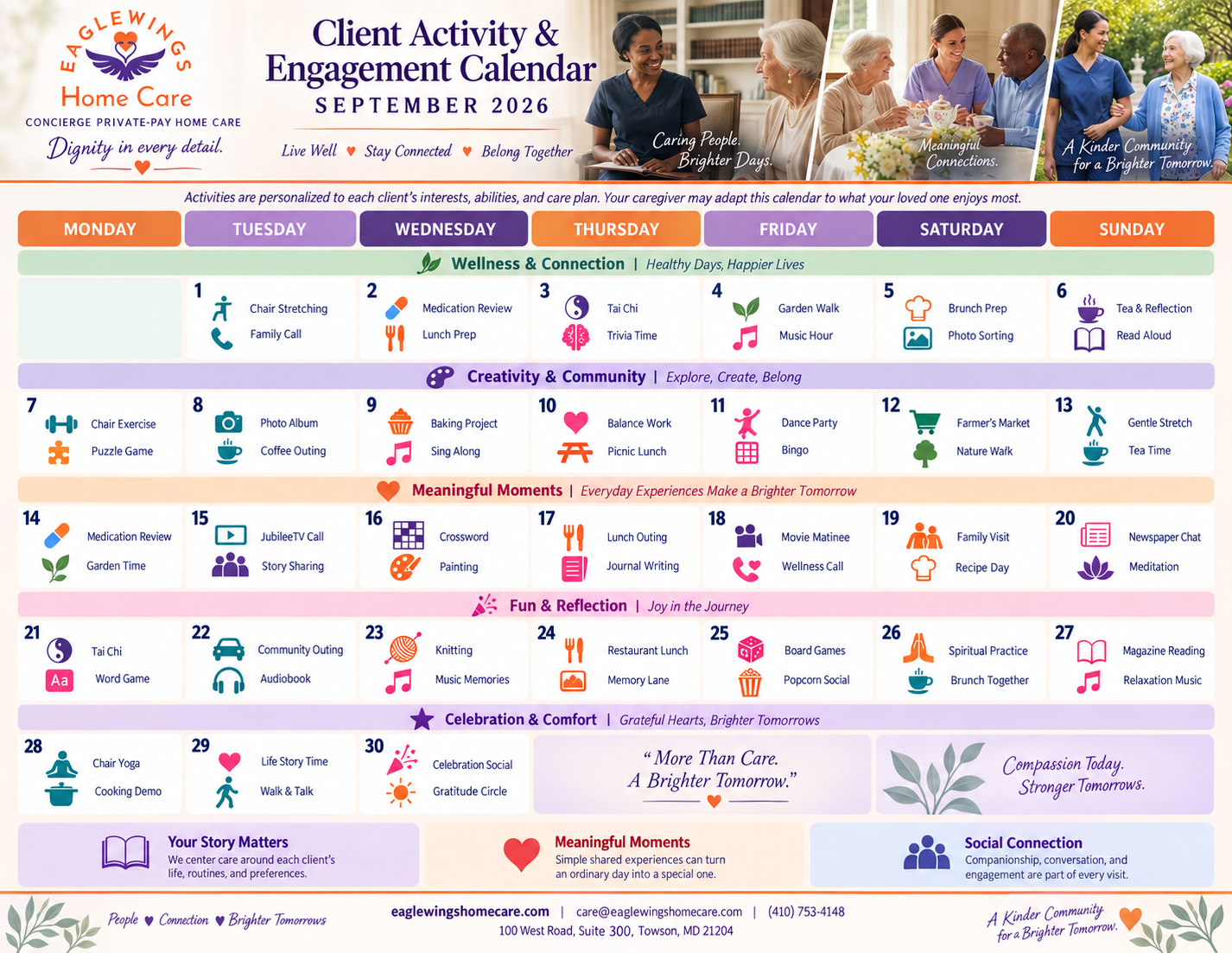
A new calendar is created every month, personalized to each client, reviewed by your RN, and delivered to your caregiver before the first visit of the month.
The Rhythm of the Month
Every calendar moves through five themes across the month, so engagement stays varied, intentional, and tuned to the whole person.
Healthy Days, Happier Lives
Gentle movement, good nutrition, and daily check-ins that keep body and spirit strong.
Explore, Create, Belong
Art, music, and shared activities that spark expression and a real sense of belonging.
Everyday Experiences Make a Brighter Tomorrow
Outings and one-on-one experiences built around what your parent loves most.
Joy in the Journey
Games, stories, and laughter alongside quiet moments to look back and savor.
Grateful Hearts, Brighter Tomorrows
Marking milestones, honoring traditions, and closing each month with warmth.
A Day with Your Caregiver
Breakfast preparation, medication reminders, grooming assistance, and the quiet conversation that starts a good day. Your caregiver knows how your loved one takes their coffee.

Playing favorite records, singing familiar songs, or simply listening together. Music activates neural networks, reduces agitation, and brings genuine pleasure — especially for those navigating cognitive decline.
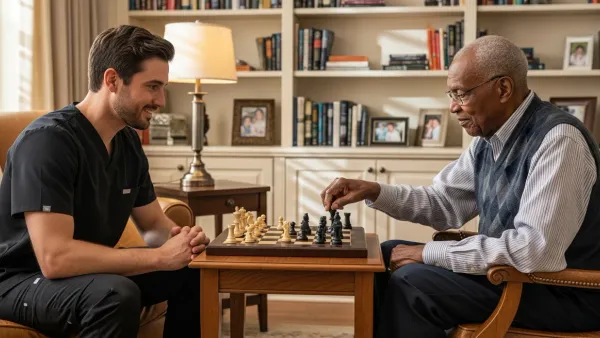
Chess, puzzles, card games, reading aloud, current events discussions. Mental stimulation is as vital as physical care — our caregivers know how to challenge the mind without causing frustration.

Accompanied walks in the garden, tending plants on the porch, bird watching from the window. Research shows that nature connection reduces anxiety and improves sleep — no facility required.

Meal preparation using familiar recipes, setting a proper table, eating together. Studies show seniors eat 50% more when sharing a meal. Nutrition improves when someone is present.

Looking through photo albums, writing letters, recording family stories. These moments preserve dignity and identity — your loved one is not a patient, they are a person with a lifetime of experience.

Watercolor painting, knitting, arranging flowers, simple crafts. Artistic activities improve fine motor skills and emotional processing — and produce something beautiful to share with family.
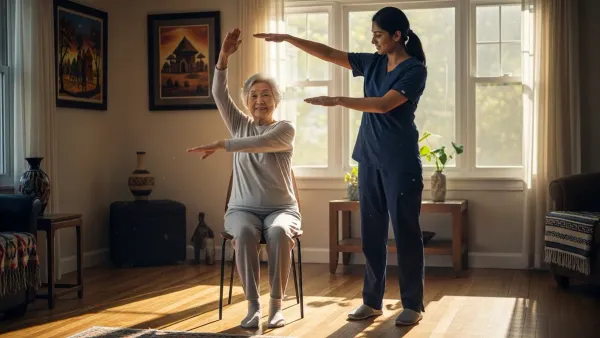
Chair yoga, short neighborhood walks, light stretching. Physical activity boosts blood flow to the brain, lifts mood, and reduces fall risk. Movement does not require a gym.
Why It Matters
Reduction in cognitive decline among socially active seniors
Wang, Karp, Winblad & Fratiglioni, 2002
More food consumed when seniors eat in company versus alone
National Academy Press, 2005
Lower dementia risk with regular cognitive engagement and mental stimulation
American Retirement Homes Research, 2025
Our Programs
Every client has a story worth knowing. We learn it, honor it, and build care around it.
Each client is seen as a person with a lifetime of experiences, not a case number. During the RN assessment, we ask about your parent's background, their interests, what they used to love doing, and what still makes them smile — and weave it into the care plan so every caregiver already knows who they are caring for.
We do not just care for your parent. We help them live.
Once a month, your parent's caregiver helps them do something that matters: visit a favorite restaurant, attend a grandchild's recital, go to their church service, or revisit a place that holds memories. Transportation and companionship are already part of the membership — Meaningful Moments makes sure they are used for something your parent actually cares about.
Isolation is the silent crisis. Our caregivers actively fight it every visit.
Isolation is the silent crisis for aging adults at home. Our caregivers combat it through weekly social outings — to community events, coffee shops, parks, or religious services — and track companionship activities after every visit. Your parent is never just watched. They are engaged.
A day with an EagleWings caregiver follows a familiar rhythm rather than a checklist: a warm greeting, gentle morning movement, medications handled calmly, a meal prepared together, a walk or outing, and quiet companionship. The same named caregiver returns each visit, so the routine is built around your parent's preferences and habits — not an institutional schedule.
Caregivers lead morning rituals, music and memory sessions, cognitive games like chess and puzzles, garden walks and nature time, shared meals, storytelling and legacy work, creative expression, and gentle movement. Each month a personalized Activity and Engagement Calendar rotates through five themes so activities stay varied and meaningful.
A new Activity and Engagement Calendar is created every month, personalized to each client, reviewed by your RN, and delivered to your caregiver before the first visit of the month. This page always shows the current month.
Your coordinator builds the calendar around your parent's interests and care plan, and a Registered Nurse reviews it before it reaches your caregiver and your family — so engagement is intentional and clinically appropriate, not improvised.
Begin